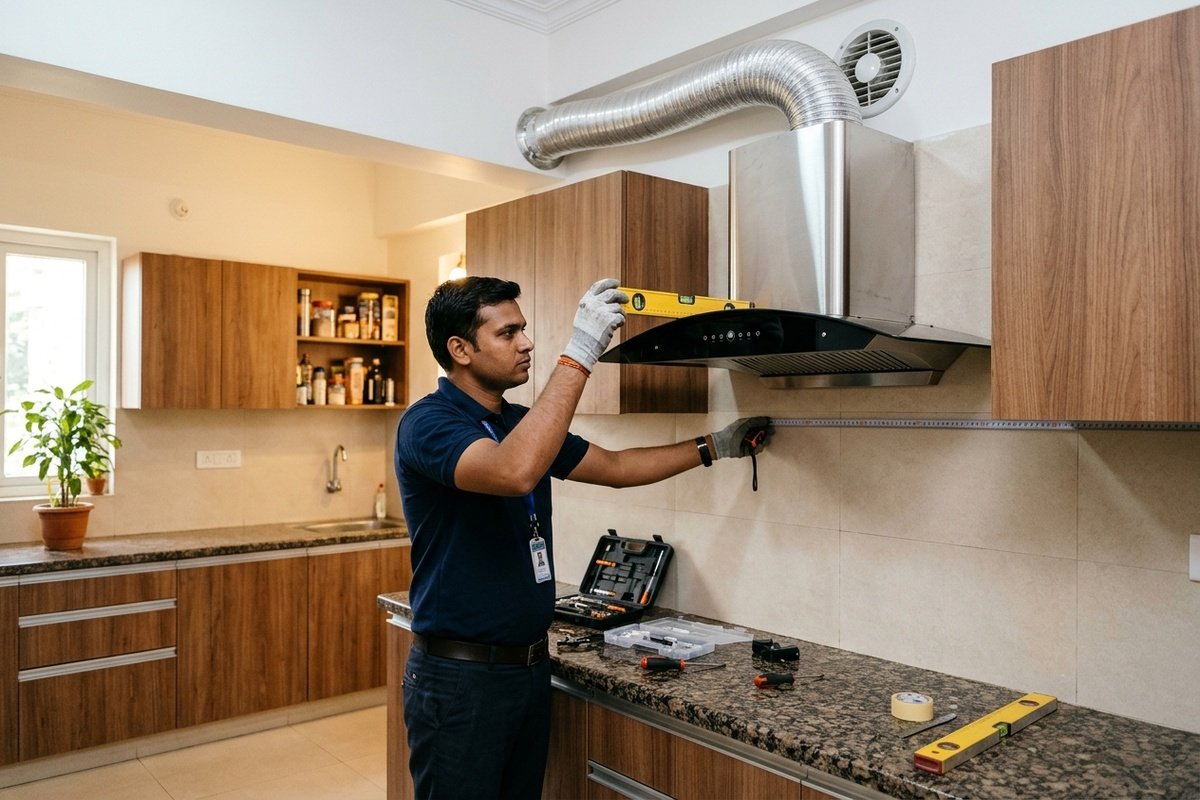
Key Summary & Essential Takeaways
- ✓Ideal clearance between gas stove burners and the chimney base is 65 cm to 75 cm (26 to 30 inches).
- ✓Standard duct pipe diameter should be 6 inches (150 mm) for modern high-suction chimneys.
- ✓Never vent your chimney into a closed false ceiling or bathroom exhaust shaft.
- ✓Anti-vibration wall anchors prevent rattles, noise, and masonry loosening over time.
1. The Golden Rule of Installation Height
The distance between your kitchen cooktop and the bottom surface of the chimney hood directly dictates extraction efficiency and home safety:
- Standard Gas Stove: 65 cm to 75 cm (26 to 30 inches). Installing below 65 cm allows direct flame heat to warp electronic sensors, melt grease collectors, and risk ignition.
- Induction / Ceramic Cooktop: 60 cm to 70 cm (24 to 28 inches). Because induction cooktops do not produce open flame, the hood can be mounted slightly lower for maximum capture.
- Installing Above 75 cm: Reduces suction effectiveness by up to 50%. Thermal air currents disperse grease vapors across the room before reaching the suction cone.
Never install a kitchen chimney lower than 60 cm above a gas cooktop. Always maintain at least 65 cm clearance from the top of the burner trivets.
2. Exhaust Duct Pipe Diameter & Routing
A powerful 1200 m³/hr chimney forced through a narrow 4-inch pipe produces deafening wind whistle and suffocated suction. High-capacity modern chimneys require a full 6-inch (150 mm) diameter exhaust duct.
Keep duct length as short as possible: under 10 feet is ideal. Ensure the duct has a slight downward slope of 1–2 degrees towards the exterior wall so any condensed grease drains away from the motor.
3. Wall Core Cutting and External Cowl Fitting
Professional installation requires drilling a neat 6-inch round core hole through the exterior kitchen wall. The opening must be sealed with weatherproof silicone sealant around the duct perimeter to prevent rainwater and insect intrusion.
An exterior exhaust cowl with gravity flaps or stainless steel wire mesh prevents pigeons, lizards, and back-drafting winds from entering your kitchen when the chimney is switched off.
Frequently Asked Questions
Can I install a kitchen chimney without an exhaust duct pipe?
Yes, through ductless mode using activated carbon filters. However, ductless chimneys only filter odor and recirculate air into the kitchen; they do not remove humidity or hot steam. Ducted installation is always strongly recommended for Indian cooking.
How much time does professional chimney installation take?
If the core hole is already prepared, standard mounting, ducting, and electrical setup takes around 45 to 60 minutes. If wall core drilling is required, it takes approximately 90 to 120 minutes.